



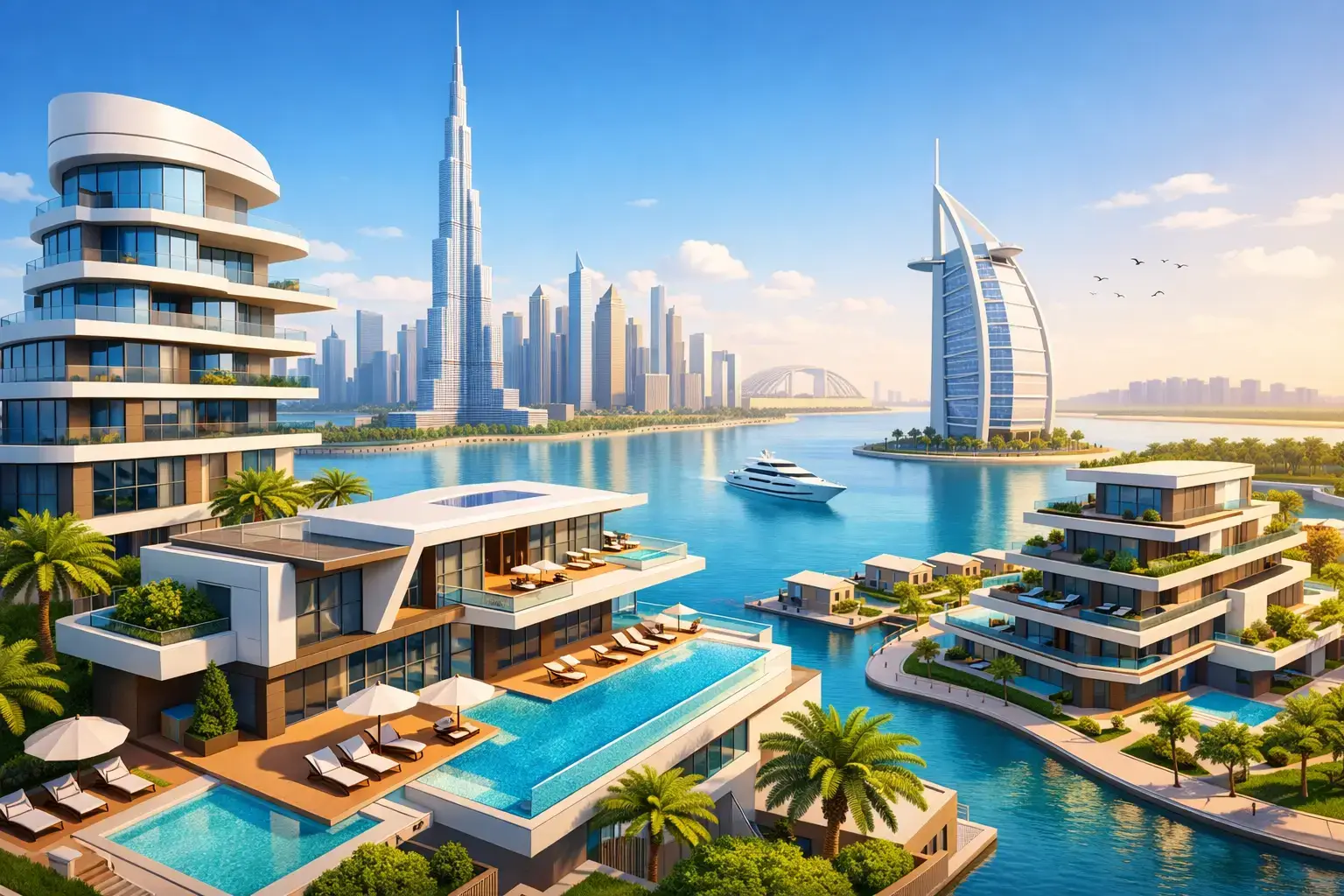
A premium home in Dubai is no longer judged by square footage alone. The most compelling property design trends Dubai buyers are responding to now have less to do with spectacle for its own sake and more to do with how a residence feels, performs, and endures.
Design has become a marker of discernment – not just taste, but judgment about lifestyle, longevity, and value.
For affluent buyers and investors, that shift matters. A well-designed home can elevate daily life, strengthen resale appeal, and signal the kind of quality that holds its relevance long after short-term trends fade. In a city that has always embraced ambition, the next chapter of luxury is more refined. It is quieter, more intentional, and far more exacting.
The property design trends Dubai is defining now
Dubai has matured into a market where luxury is expected, which means expectation alone no longer differentiates a development. What stands out now is design discipline.
Buyers are paying closer attention to proportion, light, privacy, materials, circulation, and the way shared amenities support a fuller way of living.
This is changing how premium projects are conceived. Rather than relying on visual excess, leading developments are placing greater emphasis on coherence.
The architecture, interiors, landscape, and resident experience need to belong to the same vision. When they do, a property feels complete. When they do not, even an expensive home can feel temporary.
Wellness has moved from feature to foundation
One of the clearest shifts is the rise of wellness-led planning. That does not simply mean adding a gym, spa room, or yoga deck. It means shaping homes and communities around calm, movement, natural light, and emotional ease.
Buyers are drawn to layouts that create a sense of retreat without isolation. Larger windows, stronger indoor-outdoor flow, and better acoustic privacy are all part of this. So is the placement of amenities.
A walking path, a shaded outdoor lounge, or a landscaped communal setting can do more for daily quality of life than a long list of headline features that rarely get used.
This trend also reflects a more sophisticated understanding of luxury. True exclusivity is not noise or density. It is space to breathe, privacy when desired, and convenience without compromise.
Open-plan living is becoming more intelligent
Open layouts still appeal, but the market has become more selective about what that means. Buyers are no longer impressed by openness if it comes at the expense of function.
The strongest homes now balance openness with zones – spaces that feel connected while still allowing privacy, work, entertaining, and family life to coexist.
That is especially relevant for internationally minded buyers whose homes may serve multiple roles. A residence might be a primary home, a seasonal base, a hosting environment, and an investment asset at once. Design must support all of those realities.
As a result, flexible spaces are gaining importance. A study that can transition into a private meeting room, a secondary lounge that offers separation from the main living area, or bedrooms positioned for stronger independence all contribute to a more valuable property.
It is a subtle change, but an important one. Good design is now expected to solve real life, not just photograph well.
Materials that express permanence
In premium real estate, material selection has become one of the clearest indicators of seriousness. Buyers can tell when finishes are chosen for visual impact alone and when they are selected for texture, durability, and long-term character.
Across the strongest property design trends Dubai developments are embracing, there is a clear preference for restrained palettes and enduring materials.
Natural stone, warm wood tones, brushed metals, and layered neutral finishes create homes that feel sophisticated without becoming overly themed. These choices age better, and they also appeal to a wider set of high-value buyers.
There is a practical dimension here as well. In a market where investors think in terms of both immediate desirability and future positioning, durable materials support the case for long-term value. Highly stylized interiors may create a quick impression, but timeless craftsmanship tends to travel better across market cycles.
The move away from decorative excess
Luxury used to be expressed through obvious visual statements. Today, confidence shows up differently. Cleaner lines, better detailing, and quieter elegance often communicate a higher level of quality than decorative abundance.
This does not mean homes are becoming plain. It means design is becoming more resolved. Buyers are noticing joinery, hardware, transitions between surfaces, and the consistency of finish quality throughout a home.
These details are not secondary. In many cases, they are what separate premium development from premium branding. For developers with true construction depth, this is where credibility becomes visible. Design ambition matters, but execution matters more.
Smart homes, but with restraint
Technology remains central to modern residential design, yet buyers are becoming more discerning here too. They want smart living that simplifies the experience of home – climate control, lighting scenes, access systems, and integrated security – without turning the residence into a showroom for gadgets.
The most desirable smart homes feel intuitive. Systems should disappear into the background and support comfort, efficiency, and peace of mind.
A buyer at the top end of the market is not searching for novelty. They are looking for control, reliability, and elegant integration.
This is one area where trade-offs matter. More technology does not always create a better living experience. Overcomplicated systems can date quickly or become frustrating to maintain. The better approach is selective intelligence – choosing technology that improves the home in ways residents will actually value every day.
Community design is now part of the purchase decision
Luxury buyers are not only buying a residence. They are buying into an environment. That has made community planning one of the most influential design considerations in the market.
A strong address still carries weight, but what happens within that address matters just as much.
The relationship between private homes and shared spaces, the arrival sequence, the landscaping, the privacy between neighbors, and the flow of movement through the development all shape perception.
This is why design-led communities are gaining momentum. When a project is planned with a clear lifestyle philosophy, it creates stronger emotional pull and often stronger long-term positioning. A residence inside a thoughtful environment tends to feel more complete as an asset.
For buyers considering legacy value, this is particularly important. Buildings can be replicated. Cohesive communities are much harder to reproduce.
Why location and design now work as one strategy
The old distinction between a good location and a good product is fading. In the upper tiers of the market, the two need to reinforce one another. A premium location deserves architecture and interiors that match its promise.
At the same time, excellent design can sharpen the potential of an emerging district by defining how people want to live there.
That is one reason design-led development in strategically chosen areas has become so compelling. In places with strong future upside, quality design can do more than attract attention in the present. It can establish early confidence in the character of the community and the caliber of living it intends to deliver.
For a developer such as Esnaad Real Estate, that intersection of location strategy, craftsmanship, and elevated resident experience is where long-term brand value is built. Buyers at this level are not simply comparing floor plans. They are assessing vision.
What discerning buyers should look for in property design trends Dubai offers
The most valuable response to current design trends is not to chase every new idea. It is to separate lasting direction from temporary styling.
A buyer should ask whether a home will still feel distinguished in five or ten years, whether its materials will wear well, whether its layout supports real life, and whether the broader community strengthens the investment case.
That often means looking beyond marketing language. A dramatic lobby can create a first impression, but daily living is defined by sunlight, storage, privacy, circulation, and finish quality.
Likewise, a long amenities list can sound persuasive, yet what often matters more is whether those spaces are designed with intention and used with ease.
There is also an investment lens to consider. Homes with timeless design language, strong proportions, and thoughtful planning tend to be more resilient because they appeal to both end users and future buyers. In a premium market, design is not decoration. It is part of the asset logic.
The most exciting direction in Dubai real estate is not louder luxury. It is better luxury – homes shaped by intelligence, restraint, and confidence. For buyers who value legacy as much as lifestyle, that is more than a trend. It is the standard worth waiting for.