



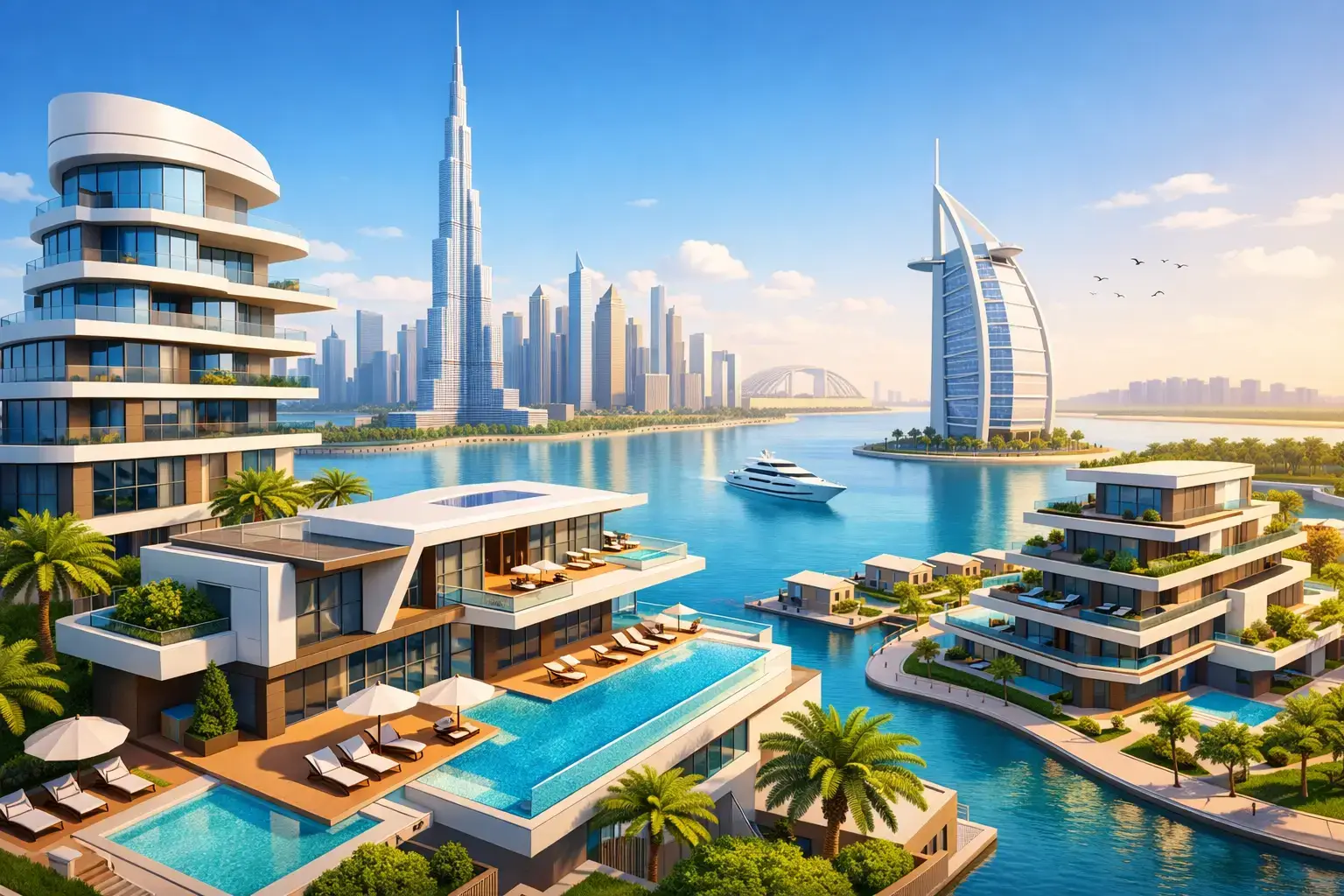
A premium address can attract attention. Design is what sustains desire.
That distinction matters in Dubai, where buyers are not choosing between ordinary options. They are comparing residences that promise prestige, convenience, and investment appeal at the highest level. In that environment, surface-level luxury is easy to imitate. What is harder to replicate is a home conceived with clarity – where architecture, materials, layout, and experience work together from day one.
This is why design-led real estate has become one of the clearest markers of quality in the market. It signals more than visual refinement. It reflects discipline, long-range thinking, and the confidence to create homes that hold their relevance well beyond launch.
What design led real estate Dubai buyers are really looking for
When affluent buyers evaluate property, they rarely separate design from value. They understand that a well-designed home does more than photograph beautifully. It improves the rhythm of daily life, enhances privacy, supports comfort, and shapes how a property performs over time.
In Dubai, this expectation is even sharper. The market attracts globally exposed purchasers who have seen prime residences in London, Miami, Singapore, and the French Riviera. They recognize the difference between decorative luxury and considered design. One relies on visual impact. The other creates a complete living environment.
Design led real estate Dubai buyers respond to typically shares a few qualities. The architecture feels intentional rather than overstated. Interiors are proportioned for modern living rather than brochure drama. Amenities are integrated into the lifestyle of the development, not added as afterthoughts. Above all, the property expresses a point of view.
That point of view matters because premium buyers are not simply purchasing square footage. They are selecting a standard of living and, often, a legacy asset. Homes that feel coherent tend to command deeper emotional confidence, and confidence is powerful in any high-value purchase.
Design is not decoration
One of the most common misunderstandings in luxury real estate is treating design as styling. Styling matters, but it is the final layer, not the foundation.
True design-led development begins much earlier. It starts with land selection and orientation. It continues through massing, access, circulation, natural light, views, materiality, and the relationship between private and shared spaces. It also considers how residents actually live – how they arrive, move, entertain, retreat, and recharge.
This is where strong developers separate themselves. A project with design leadership is not trying to compensate for weak fundamentals with imported finishes and dramatic lobbies. It is building quality into the structure of the experience.
That may show up in more practical ways than people expect. A better apartment plan with fewer wasted corridors. Windows placed to frame light instead of heat. Storage that protects visual calm. Common areas that feel private enough to use often, not just attractive enough to sell. These choices do not always produce the loudest marketing. They often produce the strongest long-term satisfaction.
Why Dubai is a natural home for design-led development
Dubai rewards ambition, but it also rewards precision. It is a city where architecture carries commercial weight. The skyline has trained buyers to notice form, identity, and visual distinction. At the same time, the maturity of the market has raised expectations around quality, usability, and finish.
That combination makes Dubai especially fertile ground for design-led residential real estate. Buyers want homes that feel current, but they also want confidence that those homes will age well. Investors may be drawn by appreciation and rental demand, yet many now look beyond launch excitement toward product resilience. End users want beauty, but beauty alone is not enough if the layout frustrates daily life or the build quality falls short.
A design-led approach answers both sides of the equation. It creates immediate desirability while supporting long-term relevance. In a market that moves quickly, that balance is valuable.
There is also a cultural dimension. Dubai is home to residents from across the world, many of whom bring sophisticated expectations around hospitality, wellness, privacy, and service. The best residential projects respond to that by creating environments that feel elevated without feeling performative. They understand that luxury is not excess for its own sake. Luxury is ease, proportion, confidence, and discretion.
The investment case for better design
For serious buyers, design is not only an aesthetic preference. It can be an investment filter.
Well-designed homes often hold stronger appeal across buyer cycles because they satisfy more than one market moment. Trends shift. Genuine quality tends to endure. A residence with clear planning, timeless materials, and a strong identity can remain desirable even as decorative fashions change.
This does not mean every design-forward project automatically becomes a superior investment. Pricing, location, developer credibility, and market timing still matter. A beautiful property in the wrong location can underperform. An architecturally ambitious project with inconsistent execution can disappoint. Design improves the proposition, but it does not erase fundamentals.
Still, when all else is competitive, better design can create a decisive edge. It can support resale interest, strengthen rental appeal among premium tenants, and reduce the risk of a project feeling dated too quickly. In high-end real estate, relevance has real financial value.
That is particularly true in communities with future growth potential. Buyers entering an emerging or evolving district often want reassurance that the product itself is built to a standard that can mature with the area. Design quality helps provide that assurance.
What discerning buyers should assess
A polished brochure tells you very little on its own. The stronger test is whether the development shows discipline across the full experience.
Look first at the relationship between architecture and lifestyle. Does the exterior language connect with the interiors, amenities, and public spaces, or does it feel like separate ideas assembled for sales purposes? Cohesion is usually a sign of deeper thinking.
Then consider livability. Are layouts efficient and elegant? Is there a sense of privacy between social and personal zones? Does natural light feel prioritized? Are the materials likely to retain their appeal five or ten years from now? Premium buyers should be especially alert to where projects cut corners in the details, because the details tend to reveal the truth of the product.
Developer capability matters just as much. Design intent is only meaningful if the team can execute it. That is why experienced development and construction leadership should carry real weight in the decision process. Vision has more value when paired with delivery discipline.
This is also where a project such as The Spark by Esnaad speaks to a wider shift in buyer expectations. The appeal is not simply that it aims to be modern. Many projects make that claim. The stronger proposition is the effort to shape a residential environment through design, craftsmanship, and a more elevated understanding of how people want to live now.
The future of luxury is more thoughtful, not more excessive
There was a time when luxury residential marketing relied heavily on spectacle. Bigger entrance statements, shinier finishes, more visible extravagance. That formula still has an audience, but it is no longer the clearest expression of premium value.
Today, many sophisticated buyers are moving toward selectivity. They want materials that feel authentic. Spaces that calm rather than overwhelm. Architecture with identity, but not noise. Amenities that serve daily life. Developments that feel curated rather than crowded with promises.
That shift favors design-led real estate because it asks a better question. Not how much can be added, but what should be created.
For Dubai, this is an encouraging direction. It points toward a more mature luxury market, one defined not only by headline-making scale but by standards of living that are thoughtful, enduring, and globally credible. The projects that stand out in the years ahead are likely to be the ones that understand prestige as a complete experience, not a visual performance.
For buyers, that makes the decision both simpler and more demanding. Simpler, because the right homes tend to reveal their quality quickly. More demanding, because true design leadership requires a sharper eye. When you find it, though, you are rarely just buying a residence. You are choosing a place with the composure to remain desirable long after first impressions fade.