



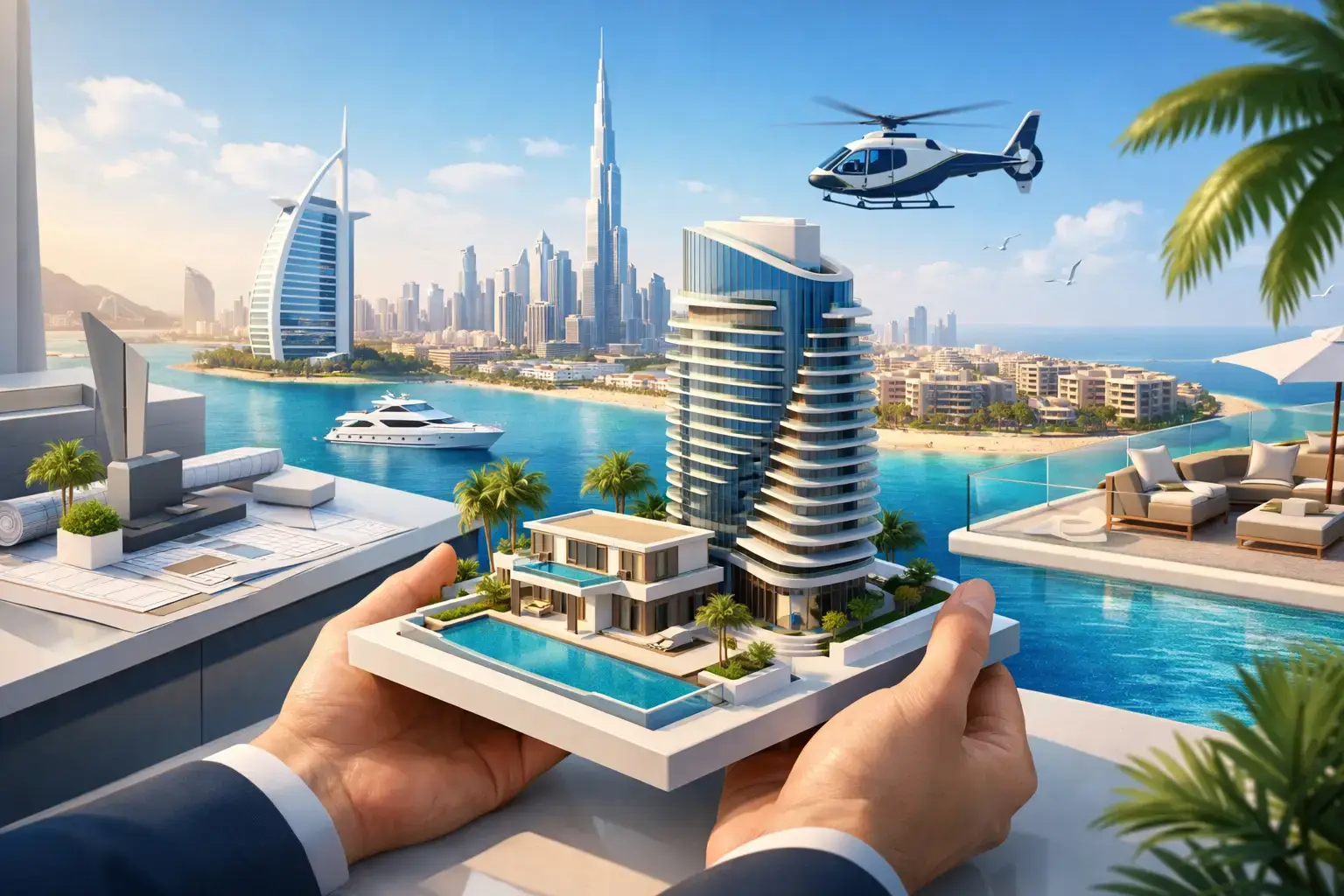
A penthouse view may capture attention, but that is rarely what defines lasting luxury. In a city shaped by ambition, the real distinction lies in what happens before the view – the land selection, the planning logic, the architectural discipline, and the standards carried through every finish. That is why choosing a luxury real estate developer Dubai buyers can trust is not simply a style decision. It is a decision about value, credibility, and the kind of life a home is built to support.
For affluent buyers and investors, the question is no longer whether Dubai offers premium real estate. It does, at every level. The sharper question is which developers are building homes with enough clarity, restraint, and long-term thinking to stand apart in a crowded luxury market. Prestige can be marketed quickly. Enduring quality takes far more.
What a luxury real estate developer in Dubai really delivers
At the top end of the market, luxury is often misread as excess. Larger rooms, dramatic lobbies, branded surfaces, and headline amenities can all create an immediate impression. Yet sophisticated buyers tend to look deeper. They assess whether a residence has been conceived with coherence – whether design, layout, materials, community planning, and resident experience belong to the same vision.
A true luxury real estate developer in Dubai does more than assemble premium features. It defines a living standard. That means selecting locations with both present desirability and future strength, shaping architecture that feels contemporary without becoming disposable, and delivering homes that retain relevance beyond the launch cycle.
There is also a practical dimension to this. Luxury buyers are not only purchasing aesthetics. They are purchasing confidence. Confidence that the developer understands construction, not just marketing. Confidence that the floor plan works in daily life, not only in renderings. Confidence that the address will still carry weight years from now.
Why design-led development matters more than marketing-led development
In any premium market, image travels fast. Design, however, reveals itself slowly. Buyers may first respond to a campaign, but they stay convinced by proportion, natural light, circulation, privacy, material character, and how a home feels when inhabited.
This is where the best developers distinguish themselves. A design-led developer begins with the resident experience. How does someone arrive home? How does the architecture frame the setting? Where does openness matter, and where should intimacy be preserved? Which materials age with dignity rather than simply photograph well on day one?
That level of discipline changes the outcome. Homes become calmer, more intuitive, and more refined. Common areas feel intentional rather than oversized. Amenities support lifestyle instead of serving as decoration. For buyers with global exposure, this difference is immediately recognizable.
There is a trade-off here worth acknowledging. Highly design-focused projects may not always chase the broadest appeal, because strong design usually involves choices. It favors identity over generic mass-market acceptance. For the right buyer, that is precisely the point.
The role of location in luxury value
Not every prime address produces a prime asset. In luxury residential real estate, location strategy is less about naming a known district and more about understanding how that district will evolve. Access, infrastructure, neighborhood character, surrounding development quality, and future demand all shape a property’s long-term profile.
A strong luxury real estate developer Dubai investors respect looks at location through both a lifestyle lens and an asset lens. A home must serve daily living beautifully, but it should also sit within a credible growth story. That could mean proximity to business hubs, strong connectivity, emerging prestige corridors, or a community framework with room to mature.
This is one reason strategically chosen residential pockets matter so much. They allow a developer to create not just individual homes, but a more complete proposition around privacy, convenience, and status. When done well, location becomes part of the lifestyle architecture, not just a map pin.
Craftsmanship is where luxury becomes credible
In premium real estate, every brand can speak about quality. The more telling question is how quality is made visible. Craftsmanship is the bridge between promise and proof.
Buyers at this level notice details others might miss. The weight of a door, the alignment of finishes, the consistency of joinery, the way stone meets metal, the precision of lighting, the quiet confidence of well-executed materials. These details do not merely decorate a residence. They signal whether the developer has rigor.
This is especially important in a market where launch momentum can overshadow delivery discipline. An accomplished developer brings construction depth into the development process from the beginning. That usually leads to stronger specification decisions, fewer compromises during execution, and a finished product that feels complete rather than merely expensive.
For end users, this translates into comfort and pride of ownership. For investors, it strengthens marketability and retention of value. Luxury that cannot withstand close inspection rarely performs well over time.
Legacy value is the new benchmark
The most sophisticated buyers increasingly think beyond acquisition. They ask whether a property can hold meaning and stature over time – as a residence, as a family asset, and as part of a wider portfolio. This is where legacy value enters the conversation.
Legacy value is created when a development combines design integrity, construction quality, strategic positioning, and emotional resonance. It is not driven by short-term trends alone. It comes from the sense that a home has been built with seriousness and permanence.
That matters in Dubai because the market attracts both lifestyle-driven purchasers and globally mobile investors. Some want a primary residence that reflects achievement. Others want a second home in a market with international relevance. Many want both. In either case, the strongest projects are those that feel worthy of being held, not simply traded.
A developer with a legacy mindset tends to make different choices. It invests in identity rather than imitation. It prioritizes enduring materials over fashionable shortcuts. It shapes communities that people want to belong to, not simply properties they want to resell.
How buyers should assess a luxury real estate developer Dubai offers
Discerning buyers should approach luxury development with a clear framework. First, consider whether the developer has a point of view. Premium real estate should reflect conviction, not borrowed aesthetics. If every project looks interchangeable with the next, that is usually a warning sign.
Second, examine whether the development story is balanced. A compelling project should speak to architecture, livability, craftsmanship, and location with equal strength. If the entire proposition rests on spectacle, the depth may be limited.
Third, pay attention to how the brand presents value. Serious developers do not reduce luxury to amenities alone. They articulate a fuller standard – one that includes resident experience, long-term relevance, and confidence in execution.
This is where brands with both real estate and construction grounding often carry an advantage. They are better positioned to align vision with delivery. For buyers making significant commitments, that alignment matters.
A market maturing beyond surface luxury
Dubai’s premium residential market has evolved. Buyers are more informed, more global in their references, and less willing to confuse visibility with quality. They understand that true luxury is not louder. It is more exact.
This shift is creating room for developers who lead with substance – those that combine refined design, disciplined execution, and a clearer philosophy of living. Projects such as The Spark by Esnaad reflect this direction, where modern residential ambition is shaped around experience, detail, and lasting desirability rather than temporary effect.
That evolution is healthy for the market. It raises expectations. It rewards developers that build with intention. And it gives buyers a stronger basis for choosing homes that meet both emotional and financial goals.
For anyone considering a premium residence, the right question is not simply which project looks impressive today. It is which developer is building something that will still feel exceptional when the market moves on, tastes change, and only real quality remains.