



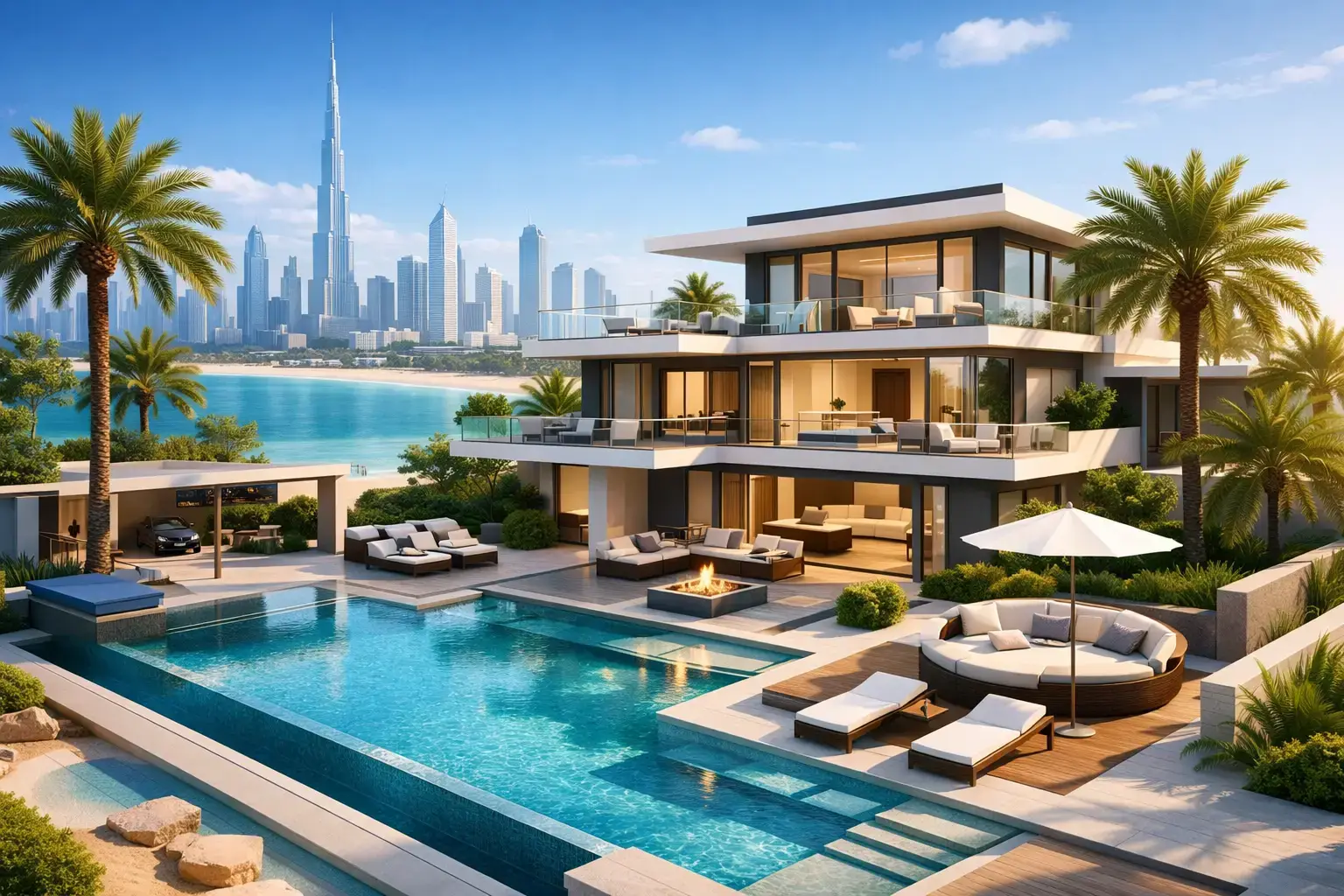
A true luxury villa is easy to recognize the moment you arrive. The proportions feel composed. The materials feel considered. The transition from entrance to living space carries a sense of calm authority rather than excess for its own sake. In Dubai, that distinction matters more than ever, because the market has matured beyond simple scale and spectacle. Buyers are no longer asking only how large a home is. They are asking whether it is intelligently designed, privately positioned, and built to hold long-term value.
That shift is what defines the appeal of modern luxury villas Dubai buyers pursue today. The category has evolved into something more exacting – architecture with clarity, interiors with restraint, amenities that support daily life, and communities that offer both prestige and future upside. For discerning buyers and investors, modern luxury is not a decorative label. It is a standard.
What modern luxury villas Dubai buyers expect now
The earlier era of luxury in residential real estate often leaned heavily on visual impact. Grand facades, oversized rooms, and ornate finishes were enough to signal status. Today, the strongest villa developments operate on a more refined level. Modern luxury is measured by the quality of the plan, the discipline of the architecture, and the sense that every feature has a purpose.
That means open layouts, but not shapeless ones. It means floor-to-ceiling glazing, but with privacy and heat control properly addressed. It means premium stone, wood, and metal finishes, chosen not only for appearance but for longevity. The most compelling villas feel elegant because they are resolved well, not because they are overloaded.
For high-net-worth buyers, this matters because a luxury home is rarely a short-term decision. It is a lifestyle statement, a family asset, and often a legacy holding. A villa that feels impressive on launch day but dates quickly is not true luxury. A residence that continues to feel relevant, composed, and desirable years later is.
Architecture that carries value
Design has become one of the clearest separators in the upper end of the market. In premium villa communities, architecture does more than create curb appeal. It shapes how a home lives day after day.
The strongest modern villas favor clean lines, balanced volumes, natural light, and a deliberate relationship between indoor and outdoor space. Double-height areas can create drama, but only when they also improve openness and light distribution. Private gardens, shaded terraces, and poolside spaces are not add-ons. They are part of the overall residential experience.
There is also a practical side to great design. Better layouts improve circulation, family living, and entertaining. Strong orientation can reduce heat gain. More thoughtful zoning creates separation between formal hosting spaces and private areas. These are choices that raise both livability and resale strength.
For that reason, architecture is not simply an aesthetic conversation. It is a value conversation. Buyers looking at modern luxury villas Dubai communities should pay close attention to whether design decisions are meaningful or merely fashionable.
Privacy, location, and the new standard of prestige
Luxury villa buyers almost always care about address, but prestige today is more nuanced than a famous name alone. A strong location still matters, yet the best opportunities often come from areas positioned for both immediate lifestyle appeal and future appreciation.
That is why strategically selected districts have become central to the modern villa story. Buyers want access to business hubs, schools, retail, and leisure, but they also want a residential atmosphere that feels composed and exclusive. The right villa community offers connectivity without sacrificing privacy.
This balance is especially important in a market like Dubai, where movement, convenience, and visibility all shape perception. A villa can be architecturally impressive, but if the surrounding environment feels compromised, the overall proposition weakens. On the other hand, when a development sits within a well-considered growth corridor, buyers gain both lifestyle confidence and investment logic.
That is part of why design-led communities in emerging prime locations are attracting serious attention. They offer the possibility of entering a strong story early, rather than paying only for an already saturated premium.
Why craftsmanship matters more than marketing
Luxury branding can create interest, but craftsmanship is what sustains credibility. In the villa segment, buyers have become more informed about what sits behind the renderings. They notice joinery quality, stone finishing, hardware selection, ceiling details, and how well a home actually comes together.
This is where developer pedigree matters. A company with real construction depth tends to understand that luxury is built through precision, not slogans. Material selection should support endurance as much as visual impact. Execution should feel consistent from entry statement to bathroom detailing.
There is an important trade-off here. Some developments prioritize surface-level glamour because it sells quickly. Others invest more heavily in design discipline and construction quality, even if that is less obvious in a single photograph. For buyers thinking beyond the immediate handover moment, the second approach is usually the stronger one.
A well-crafted villa ages with dignity. It photographs well, lives well, and remains competitive when the market evolves. That staying power is one of the clearest signs of genuine luxury.
Modern luxury villas Dubai as an investment class
For investors, villas occupy a particularly compelling position because they sit at the intersection of scarcity, lifestyle demand, and long-term capital preservation. Apartments may offer accessibility and scale, but premium villas often deliver something harder to replicate – privacy, land component, and emotional desirability.
That does not mean every villa is automatically a strong investment. Performance depends on location, supply, developer reputation, product quality, and the broader profile of the community. A villa that is too generic may struggle to stand out. A home that is overly customized to a narrow taste may limit resale appeal. The best-performing assets tend to balance distinction with broad market desirability.
International buyers are especially drawn to Dubai because the city offers a rare combination of global connectivity, ambitious urban planning, and a high standard of lifestyle infrastructure. Within that context, modern villas can serve both as residences and as strategic stores of value.
For end users, the logic is equally strong. Instead of treating a luxury purchase as purely emotional, many buyers now expect the home to work on two levels – elevating daily life while holding its place as a high-quality asset. That dual expectation has become central to the premium market.
The role of community in modern villa living
A villa should never be evaluated in isolation. The wider community shapes security, atmosphere, convenience, and long-term desirability. This is one reason master-planned environments continue to outperform fragmented luxury pockets.
Today’s affluent buyers want more than a private plot and an attractive facade. They want landscaped streetscapes, coherent design language, controlled access, and an overall residential experience that feels curated. They also want proximity to meaningful amenities, whether that means wellness spaces, green areas, retail convenience, or access to major urban destinations.
The strongest developments create a sense of belonging without compromising exclusivity. That balance can be difficult to achieve. Too much density weakens privacy. Too little surrounding infrastructure can make daily life feel disconnected. Great communities resolve both.
This is where a design-led developer can set a higher benchmark. When the philosophy extends beyond individual homes and into the broader environment, the result is more credible, more livable, and more enduring. That standard is increasingly visible in projects shaped around elevated living rather than simple inventory creation, including flagship launches such as The Spark by Esnaad.
How discerning buyers should evaluate a villa opportunity
The smartest buyers tend to look past the obvious headline features first. A private pool, large square footage, and premium finishes matter, but they are not enough on their own. The more telling questions are about proportion, planning, privacy, build quality, and future relevance.
A good villa should feel coherent from arrival to interior flow. Outdoor space should not feel leftover. Bedrooms should offer genuine retreat, not just size. Service areas should function efficiently. The design should support entertaining, family life, and quiet daily routines with equal confidence.
It also helps to consider the long view. Will the architecture still feel current in five or ten years? Does the location have a clear trajectory? Is the developer building with a standard that protects the asset over time? Those questions tend to separate impulse purchases from wise ones.
Luxury at this level is never about having more for the sake of more. It is about owning something rarer – a home with presence, precision, and staying power. For buyers who value both lifestyle and legacy, that is where the real opportunity lies.
The best villas are not the ones that ask for attention at every turn. They are the ones that earn admiration quietly, through design, craftsmanship, and the confidence of lasting value.