



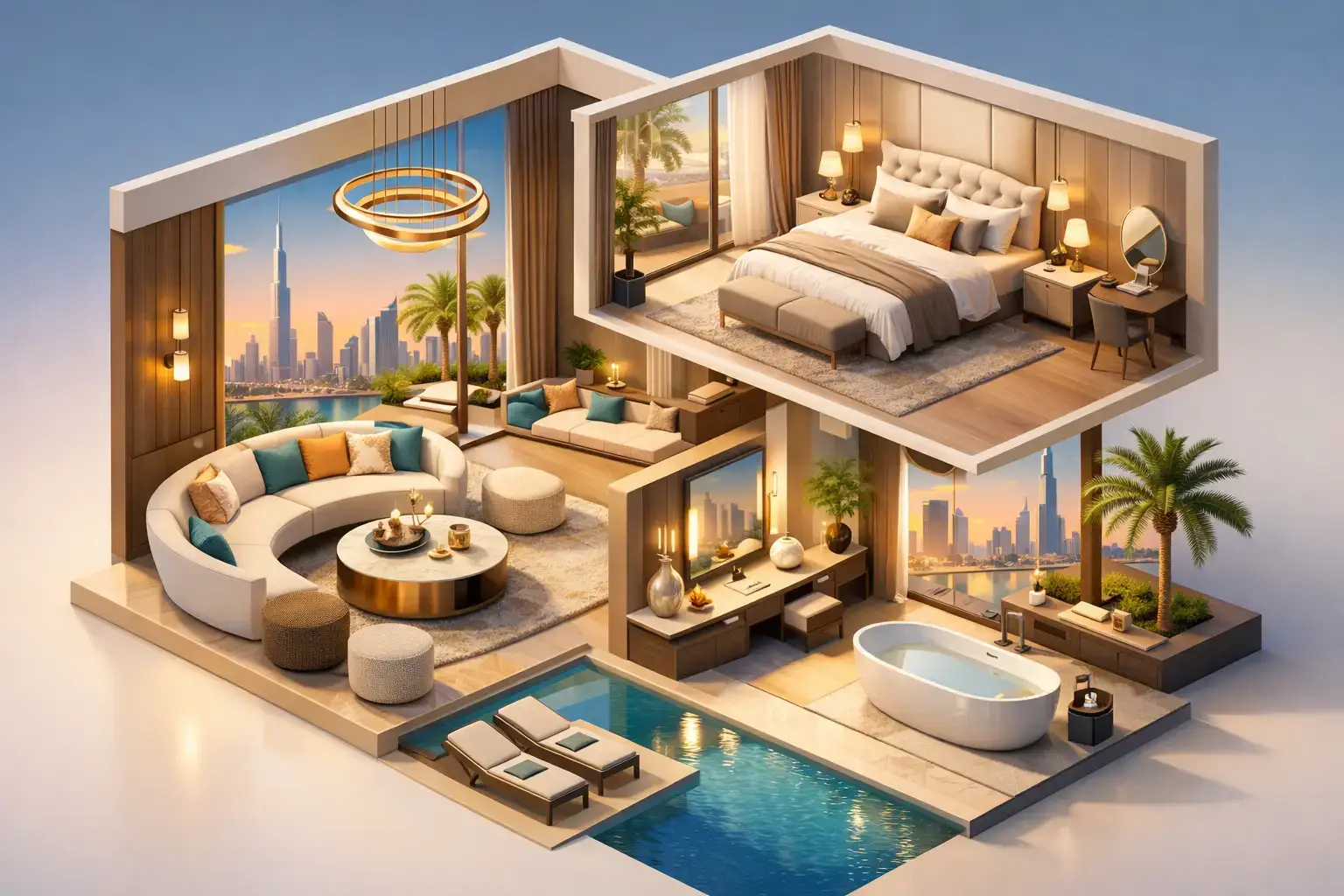
Walk into a truly exceptional residence and the difference is immediate. Crafted luxury interiors Dubai homes are known for do not rely on excess or ornament for effect. They command attention through proportion, restraint, material confidence, and a sense that every surface, line, and transition has been considered with purpose.
For buyers at the premium end of the market, interiors are not a finishing layer added after the real work is done. They are central to how a home performs, how it feels, and how it holds value over time. In a city defined by ambition and architectural presence, the standard is higher. A luxury home must deliver visual impact, certainly, but also permanence, livability, and a point of view.
What crafted luxury interiors mean in Dubai homes
In the strongest residences, craft is visible without becoming theatrical. You see it in the joinery lines that align cleanly across a wall elevation, the stone that is selected for continuity rather than convenience, the lighting that shapes mood instead of simply brightening a room. These decisions are quiet, but they are decisive.
That is what separates a premium interior from one that merely photographs well. A well-crafted home is coherent. Materials belong together. Spaces unfold naturally. Nothing feels arbitrary. In Dubai, where the market includes everything from polished investor stock to fully bespoke residences, this distinction matters.
Luxury today is less about accumulation and more about editorial discipline. Buyers with experience can tell when a home has been designed around lasting standards rather than passing taste. They notice whether the palette will age well, whether the floor plan supports real daily life, and whether the quality is consistent behind closed doors as much as in public-facing spaces.
Why buyers now judge interiors as a long-term asset
The premium residential market has matured. Sophisticated buyers are no longer responding only to address and amenities. They are examining how a home is made, because interior quality affects more than immediate enjoyment. It shapes maintenance demands, resale perception, tenant desirability, and the overall credibility of the property.
This is especially relevant for internationally minded purchasers who compare homes across global cities. They expect design standards that feel current, but they also expect durability. A dramatic lobby or statement kitchen may create a first impression, yet long-term value is built through deeper choices – cabinet construction, hardware quality, stone finishing, acoustic comfort, storage integration, and room proportions that remain useful as lifestyles change.
There is also a practical truth at the top of the market. Correcting poor interior decisions after purchase is expensive and disruptive. Buyers would rather invest in a home where craftsmanship is already embedded into the development philosophy. That confidence becomes part of the property’s appeal.
The design language behind crafted luxury interiors Dubai homes demand
The most compelling homes rarely chase novelty. They build around timeless fundamentals and then introduce character through detail. In Dubai’s premium market, that often means generous natural light, calm palettes with depth, and architectural framing that lets materials speak with clarity.
Stone remains central, but not every stone application signals luxury. The difference lies in selection and restraint. Large-format slabs, consistent veining, well-resolved edges, and thoughtful placement create elegance. Overuse can have the opposite effect. The same is true of metal accents, textured wood, and glass. A crafted interior understands when to emphasize and when to step back.
Ceiling design is another marker. In lower-quality homes, ceilings can become busy in an effort to look expensive. In stronger interiors, they help establish proportion, conceal services intelligently, and support a layered lighting scheme. The result feels composed rather than crowded.
Furniture planning matters too, even in residences sold without full furnishing packages. A well-designed interior anticipates how a room will be inhabited. It respects circulation, creates balance, and allows for both formal presentation and private comfort. That is the kind of intelligence buyers feel before they consciously identify it.
Material integrity is where credibility begins
Premium buyers are increasingly skeptical of surface-level luxury. They want to know whether the walnut veneer is convincing, whether the stone is genuinely premium, whether the fixtures have substance in the hand, and whether the paint finish, wardrobes, and kitchen systems are built to endure daily use.
Material integrity is not about choosing the most expensive option in every category. It is about specifying the right material in the right place. A beautiful natural stone may be ideal for one application and impractical for another. A matte finish may look elegant but require more care. True luxury accounts for these trade-offs rather than pretending they do not exist.
That is why developer discipline matters. A design-led brand with construction depth can make better judgments between appearance and performance. It can protect the design vision while ensuring the homework in real life.
Craftsmanship is felt in the details buyers often notice last
The irony of excellent interiors is that their most important achievements can appear effortless. Doors close with assurance. Corners resolve cleanly. Storage is integrated without visual clutter. Bathrooms feel calm because drainage, lighting, mirrors, and stone cuts have all been carefully coordinated.
These details are not decorative extras. They are signs of mastery. They reveal whether a residence has been value-engineered to hit a headline price or shaped to deliver a premium standard worthy of its market position.
For discerning buyers, this is where trust is won. A home may impress during a first walk-through, but confidence builds when every layer supports the same story. If the public spaces are grand and the private spaces feel compromised, the illusion breaks. Crafted interiors maintain consistency from entry sequence to wardrobe interior.
Lifestyle matters as much as visual impact
A luxury home must do more than look refined. It should support the rhythm of contemporary living with discretion and ease. That includes kitchens that can transition from entertaining to family use, bedrooms that feel insulated from noise and visual distraction, and bathrooms that deliver a private, restorative atmosphere rather than a hotel imitation.
In Dubai, many buyers also want homes that accommodate multiple modes of living. They may host frequently, work from home, travel often, or purchase with family legacy in mind. That means flexibility matters. Open-plan living can feel expansive, but without proper zoning it can also lose intimacy. Floor-to-ceiling glass creates drama, but only if light, heat, and privacy are handled intelligently.
The best interiors do not force a lifestyle. They elevate one.
Where developers make the biggest difference
Individual homeowners can personalize finishes later, but the foundational decisions belong to the developer. Ceiling heights, room proportions, window placement, core layout, material hierarchy, and construction quality set the tone for everything that follows.
This is where a brand’s philosophy becomes visible. Developers that see homes as legacy assets tend to invest differently. They pursue coherence instead of quick wins. They understand that sophistication is cumulative. It is built through architecture, interior design, specification, and execution working in alignment.
That alignment is one reason premium buyers are drawn to design-led residential brands. They are not simply purchasing square footage. They are buying into a standard, a worldview, and a promise that the home will remain relevant years after trend-led finishes have faded.
For this reason, projects shaped with a clear design philosophy and disciplined delivery stand apart. Esnaad Real Estate represents this kind of ambition – homes conceived not as disposable inventory, but as enduring addresses defined by craftsmanship, proportion, and elevated living.
How to recognize lasting luxury before you buy
A buyer does not need to be a designer to assess interior quality. The right questions usually reveal the truth. Does the space feel calm or overworked? Are materials consistent across the home? Is the lighting layered or flat? Do practical areas receive the same care as feature areas? Would the interior still feel credible in five or ten years?
It also helps to look beyond show-unit styling. Remove the scent, the staging, and the soundtrack in your mind. What remains? If the architecture and materials still feel composed, the property likely has substance. If the experience depends on decoration, the value may be thinner than it first appears.
That judgment matters because genuine luxury is not louder. It is more exacting. It respects both aesthetics and longevity. It creates homes that satisfy immediate desire while rewarding ownership over time.
The most memorable residences are not the ones trying hardest to impress. They are the ones built with enough confidence to let craftsmanship, material intelligence, and thoughtful design speak for themselves. For buyers seeking distinction with staying power, that is where real value begins.